

Your Comfort Zone is a Cage \/ Break Free from Your Comfort Zone: How to Move Beyond Fear and Start Growing
Comfort Can Quietly Become a Trap
Comfort is not always a bad thing.
You need places where you can rest, recover, and feel secure.
Familiar routines can make life easier.
Stability can help you protect your energy and manage daily responsibilities.
The problem begins when comfort stops being a place where you rest and becomes a place where you hide.
Your comfort zone includes the habits, situations, and choices that feel familiar.
You know what to expect there.
You may not be completely satisfied, but at least you understand the environment.
That predictability can feel safer than trying something new.
Over time, however, safety can become limitation.
You may keep working in a situation that no longer serves you.
You may avoid sharing your ideas because criticism feels uncomfortable.
You may delay starting a business, improving your health, meeting new people, or learning a valuable skill because you are afraid of failing.
Nothing dramatic has to happen for you to become stuck.
You simply keep repeating what you already know.
That is how a comfort zone becomes a cage.
The door may be unlocked, but fear convinces you to stay inside.
💡 Ready to Build Real Confidence (Without Overthinking It)?
If you’re tired of starting over and want a simple system that actually sticks, this is for you.
👉 Start building confidence today:
Start small. Stay consistent. Watch what happens.
Why Familiarity Feels So Powerful
Your mind naturally prefers what it recognizes.
Familiar situations require less mental effort.
You know the rules, understand the risks, and can usually predict what will happen next.
New situations contain uncertainty, and uncertainty can make your brain pay closer attention to possible danger.
That response once helped people survive real threats.
Today, it can activate when you face ordinary growth opportunities.
You might feel it before:
Applying for a better position
Attending an unfamiliar event
Publishing your work
Setting a boundary
Starting a difficult conversation
Learning new technology
Asking for help
Making a financial change
Your racing thoughts do not necessarily mean the opportunity is wrong.
They may simply mean it is unfamiliar.
Fear often uses reasonable-sounding language.
It tells you that you need more time, more confidence, more information, or a perfect plan.
Preparation is useful, but endless preparation can become avoidance.
There will rarely be a moment when every doubt disappears.
Growth usually begins while some uncertainty is still present.

Growth Lives Beyond What You Already Know
You cannot build a new life using only familiar actions.
If you want a different result, something in your behavior must change.
That does not mean you need to abandon everything or make a reckless decision.
It means you must become willing to enter situations where you are still learning.
Think about any ability you now perform with confidence.
At one point, it was unfamiliar.
The first time you drove, spoke before a group, handled an important responsibility, or used a complicated tool, you probably did not feel completely comfortable.
Repetition changed that. What once required courage eventually became normal.
This is how your comfort zone expands.
You step outside it, experience the discomfort, learn that you can handle it, and return with more confidence than you had before.
The unfamiliar gradually becomes familiar.
Growth is not the absence of discomfort.
It is your ability to move through discomfort without allowing it to control every decision.
The Hidden Cost of Staying Stuck
Avoiding discomfort can provide immediate relief.
You decide not to apply, so you no longer have to worry about rejection.
You avoid the conversation, so you escape an awkward moment.
You postpone the project, so you do not have to risk producing imperfect work.
That relief feels like evidence that avoidance helped you.
But short-term relief can create a long-term cost.
Every time fear makes a decision for you, your world becomes slightly smaller.
You begin trusting your anxiety more than your ability.
Opportunities pass, goals remain unfinished, and frustration grows.
Staying stuck may cost you:
Skills you never develop
Relationships you never build
Income you never pursue
Ideas you never share
Experiences you never enjoy
Confidence you never earn
Time you cannot recover
The price is not always visible today.
It appears gradually in the form of regret, resentment, boredom, and the feeling that you are capable of more.

💡 Ready to Build Real Confidence (Without Overthinking It)?
If you’re tired of starting over and want a simple system that actually sticks, this is for you.
👉 Start building confidence today:
Start small. Stay consistent. Watch what happens.
Fear Is Not Always a Stop Sign
Fear can protect you from genuine danger, so it should not be ignored completely.
But not every uncomfortable feeling signals a serious threat.
Sometimes fear is simply announcing that you are entering unfamiliar territory.
Ask yourself:
Is this dangerous, or is it merely uncomfortable?
There is a major difference.
Walking into an unsafe situation requires caution.
Introducing yourself at a professional event may feel frightening, but it is usually discomfort rather than danger.
Investing money you cannot afford to lose could be reckless.
Asking a knowledgeable person to teach you about investing is a manageable step.
This distinction helps you act wisely without treating every fear as a command to retreat.
You do not need to eliminate fear before moving.
You need to evaluate it, prepare responsibly, and decide whether the possible growth is worth the manageable risk.
Courage is not pretending that nothing scares you.
Courage is refusing to let fear automatically choose your future.
Stop Waiting to Feel Completely Ready
Readiness is often created through action.
You may believe confidence must come first:
1. Become confident.
2. Take action.
3. Get the result.
In real life, the order is usually different:
1. Take a small action.
2. Learn from the experience.
3. Become more capable.
4. Build confidence.
Confidence is evidence-based.
It grows when you see yourself follow through.
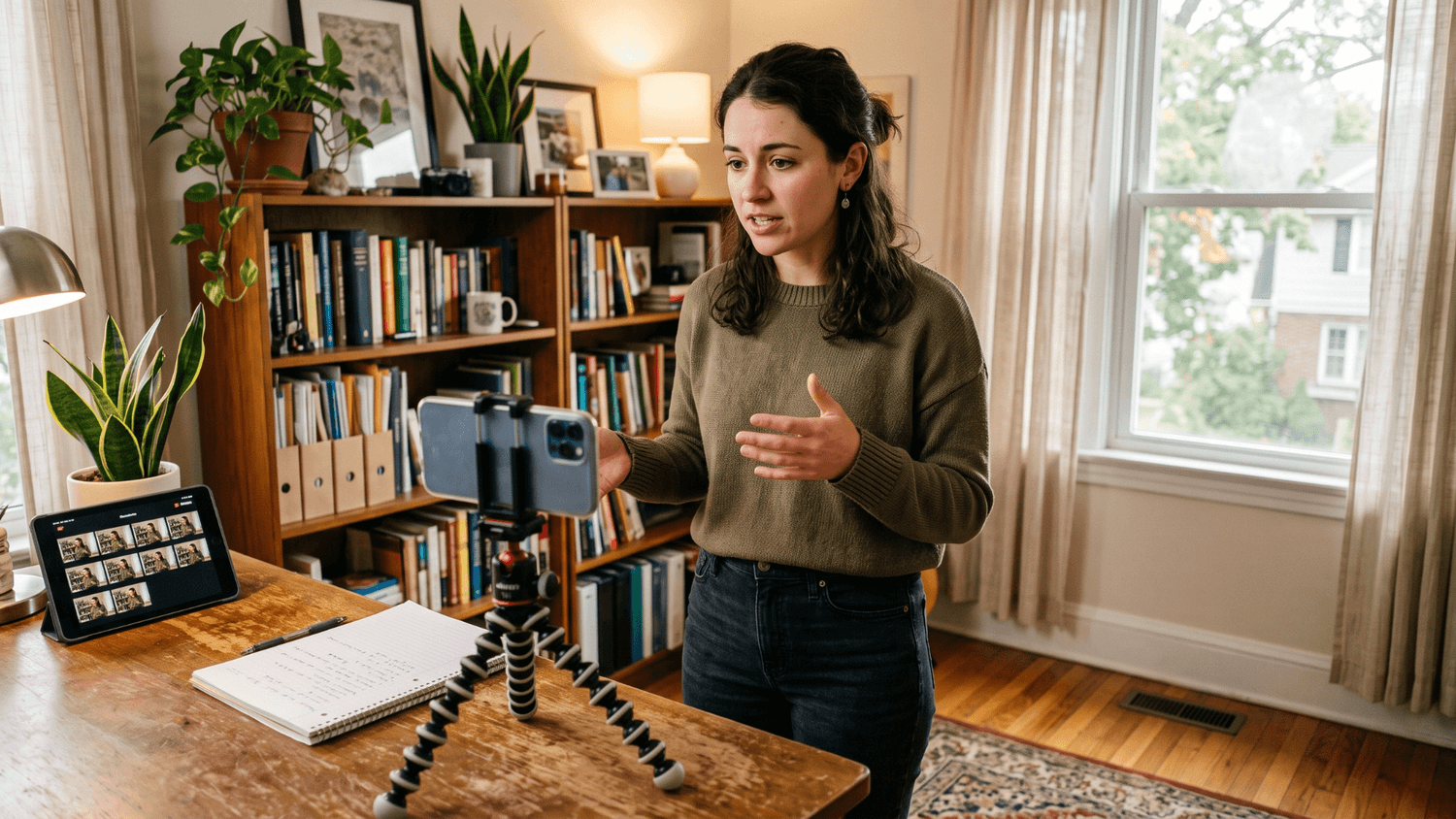
Suppose you want to create videos but feel uncomfortable on camera.
Waiting to feel confident may keep you waiting for years.
Recording one private 30-second practice video gives you experience.
Recording five gives you more. Publishing a short video eventually gives you evidence that you can survive being seen.
The first attempt may be awkward.
That does not make it a failure.
It makes it your first repetition.
Use Small Steps to Expand Your Comfort Zone
Breaking free does not require one enormous leap.
In fact, a step that is too large may overwhelm you and reinforce avoidance.
A smaller challenge allows you to practice courage while remaining able to think, learn, and recover.
Choose one goal you have been postponing.
Then reduce the first action until it feels uncomfortable but possible.
For example:
Do not promise to exercise every day; walk for ten minutes today.
Do not try to build an entire business; research one customer problem.
Do not plan a perfect speech; practice the opening paragraph.
Do not attend a major event for hours; stay for 30 minutes.
Do not reorganize your entire life; complete one delayed task.
Do not master a new program; learn one useful feature.
Do not force a major confrontation; write down what you need to say.
A small step is not meaningless.
It interrupts the pattern of avoidance.
Once you complete it, choose the next manageable action.
Repeated exposure teaches your mind that unfamiliar does not automatically mean unsafe.
💡 Ready to Build Real Confidence (Without Overthinking It)?
If you’re tired of starting over and want a simple system that actually sticks, this is for you.
👉 Start building confidence today:
Start small. Stay consistent. Watch what happens.
Create a Personal Discomfort Ladder
A discomfort ladder turns a frightening goal into a sequence of practical steps.
Write your desired outcome at the top.
Under it, list increasingly challenging actions that lead toward it.
If your goal is public speaking, your ladder might look like this:
Read your speech aloud while alone.
Record yourself and watch the recording.
Practice for one trusted person.
Speak during a small online meeting.
Ask a question at an in-person event.
Give a short presentation to a small group.
Deliver a longer presentation to a larger audience.
Start near the bottom, not the top.
Repeat each step until it becomes more manageable, then move upward.
You do not need every trace of anxiety to disappear.
You only need enough stability to attempt the next level responsibly.
This method works because it replaces one overwhelming challenge with several clear actions.
It also gives you visible proof of progress.

Change the Way You Interpret Discomfort
The meaning you give discomfort affects how you respond to it.
If you tell yourself, “This anxiety proves I cannot do it,” you are more likely to retreat.
If you say, “This feels uncomfortable because I am learning,” the same sensation becomes easier to tolerate.
Try replacing automatic thoughts with more accurate ones:
“I have to be perfect” becomes “I need to be present and prepared.”
“Everyone will judge me” becomes “Most people are focused on themselves.”
“Failure will ruin everything” becomes “A setback will give me information.”
“I am not confident enough” becomes “Action is how I build confidence.”
“I have never done this” becomes “I can learn the first step.”
“I am too late” becomes “I can begin with the time I have now.”
This is not empty positive thinking.
You are not claiming that every attempt will succeed.
You are reminding yourself that imperfection, uncertainty, and learning are normal parts of progress.
Build Recovery Into the Process
Growth does not mean forcing yourself to live under constant pressure.
If you challenge yourself without rest, reflection, or support, you may burn out.
Healthy growth moves between effort and recovery.
After taking an uncomfortable step:
Pause and breathe.
Notice what went better than expected.
Identify what you learned.
Adjust your next attempt.
Give yourself time to recover.
Recognize that showing up mattered.
Do not immediately attack yourself for every mistake.
Honest evaluation is useful; humiliation is not.
Ask, “What can I improve next time?” instead of, “What is wrong with me?”
That question keeps your attention on learning.

Choose Growth Without Becoming Reckless
Leaving your comfort zone does not mean ignoring consequences.
You do not have to quit your job without a plan, spend money carelessly, trust unsafe people, or accept every opportunity.
Responsible growth combines courage with judgment.
Before making a significant move, consider:
What is the possible benefit?
What is the realistic risk?
What preparation would reduce that risk?
What resources or support do I need?
Can I test the idea on a smaller scale?
What would recovery look like if it does not work?
If you want to change careers, you might take a course, speak with people in the field, build savings, or begin part-time.
If you want to start a business, you could test a simple offer before investing heavily.
The goal is not dramatic action.
The goal is meaningful forward movement.
Protect Your Progress from Old Patterns
Your old comfort zone will continue calling you back.
After one difficult experience, you may feel tempted to stop.
A mistake can quickly become an excuse to return to familiar habits.
This is why you need a plan for moments when motivation is low.
Create simple personal rules:
I will not judge a new effort after only one attempt.
I will ask for feedback before assuming I failed.
I will reduce the step instead of abandoning the goal.
I will track actions, not only outcomes.
I will return after a difficult day.
I will remember why this change matters.
These rules protect you from making permanent decisions during temporary discomfort.
Consistency does not require flawless performance.
It requires returning.
Surround Yourself with People Who Support Growth
Environment influences what feels normal.
If everyone around you avoids risk, mocks new ideas, or expects you to remain unchanged, growth becomes more difficult.
Their reactions may reflect their own fear rather than your ability.
Look for people who are honest, responsible, and willing to improve.
They do not have to agree with every decision. Good support includes encouragement, useful questions, and respectful accountability.
You can find that support through:
A trusted friend
A mentor
A professional community
A class or workshop
An accountability partner
A group built around a shared goal
Growth becomes easier when you are reminded that uncertainty is part of learning, not proof that you should stop.
💡 Ready to Build Real Confidence (Without Overthinking It)?
If you’re tired of starting over and want a simple system that actually sticks, this is for you.
👉 Start building confidence today:
Start small. Stay consistent. Watch what happens.

Final Thought: Your Next Level Begins with One Step
Your comfort zone may feel safe, but safety without growth can become its own kind of loss.
Every meaningful goal will ask you to face something unfamiliar.
You may need to risk rejection, tolerate imperfect beginnings, learn in public, or continue without knowing exactly how everything will work.
You do not need to become fearless.
You only need to stop treating fear as the final authority.
Choose one area where comfort has been keeping you stuck.
Name the next manageable action.
Prepare what you reasonably can, and take that step before overthinking pulls you backward.
Then take another.
Each time you move through discomfort, you build evidence that you are more capable than fear suggested.
Your world expands.
Your choices increase.
Your confidence becomes real because it is supported by action.
The cage is familiar, but the door is open.
You were not meant to spend your life playing small.
Break free from your comfort zone and begin moving toward the life waiting beyond it.

Categories


Trending
Curious about Java Burn? Discover how this fat-burning coffee additive works, what ingredients it uses, and if it’s right for your daily routine.
Looking for real ways to make extra money in 2024? Here are 15 legitimate side hustles and online income ideas that actually work — no scams, no fluff.
Discover how to build real confidence using small, science-backed micro-habits. No fluff — just proven strategies that actually work.

About me

Hi there 👋 My name is Lisa Grove, I'm the maker of This Blog. One of my favorite things is travel, fun and sun :)
💡 Keep Exploring: Handpicked Reads for You
Discover proven strategies to attract leads using Facebook & Instagram — no ad budget needed.
Learn how to write subject lines and content that get clicks, opens, and responses.

Start your journey toward financial freedom with this simple, proven framework.
📬 Want Smart Marketing Tips in Your Inbox?
Join our free newsletter for weekly tips that help you grow faster and smarter.
© 2025 reebesthelp.com. All rights reserved.