


Why Your Sleep Quality Matters More Than Sleep Time: How to Wake Up Rested and Ready for the Day
Eight Hours in Bed Does Not Always Mean Eight Hours of Rest
You can spend eight or nine hours in bed and still wake up feeling drained.
That may seem confusing.
You gave yourself enough time to sleep, stayed in bed all night, and followed the usual recommendation to get more rest.
Yet your body feels heavy, your thoughts feel slow, and your energy disappears before the day properly begins.
The missing piece may be sleep quality.
Sleep duration measures how long you sleep.
Sleep quality reflects how well you sleep during that time.
It considers whether your sleep is reasonably continuous, whether you settle down without a long struggle, and whether you wake feeling restored.
Both duration and quality matter.
The goal is not to choose one and ignore the other.
However, simply adding more time in bed may not help when the rest itself remains unsettled.
A person who sleeps peacefully for a suitable amount of time may feel better than someone who spends longer in bed but repeatedly wakes, tosses and turns, or struggles to relax.
That is why improving your nights starts with looking beyond the clock.
💡 Create a Calmer Start to Your Night
A better evening does not require a perfect routine.
Begin with one small habit that helps your body slow down.
👉 Get the Simple Health Foundations Guide
Keep it simple. Stay consistent. Build from there.
What Good Sleep Quality Actually Looks Like
Quality sleep does not mean that you must fall asleep instantly or remain completely motionless until morning.
Occasional wake-ups happen, and one restless night does not mean your routine has failed.
Instead, look at the overall pattern.
Healthy, restorative sleep generally feels reasonably settled.
You can wind down, fall asleep without fighting your mind for hours, and return to sleep after brief interruptions.
In the morning, you feel capable of beginning the day rather than desperate to crawl back under the covers.
Some practical signs of better-quality rest include:
Falling asleep within a reasonable period
Experiencing fewer long awakenings
Feeling physically restored in the morning
Having steadier energy during the day
Maintaining better focus on ordinary tasks
Depending less on repeated snoozing to get moving
Feeling less irritable because of exhaustion
No single sign tells the entire story.
For example, morning tiredness can have many causes.
The useful approach is to notice repeated patterns rather than judging your health by one night.
Ask yourself a better question than, “How many hours was I in bed?”
Ask, “How did that sleep prepare me for today?”

Why Restless Sleep Changes the Next Day
A poor night rarely stays contained within the bedroom.
It follows you into the morning.
You may notice that simple decisions require more effort.
You reread the same sentence, lose track of a task, or feel unusually impatient with normal interruptions.
Exercise may feel harder, and preparing a balanced meal may seem less appealing than reaching for whatever is fastest.
This does not mean you lack discipline.
Fatigue changes the amount of effort ordinary actions seem to require.
Low-quality sleep can affect several parts of daily life:
Your attention feels scattered
When you are not well-rested, concentrating on one task can become difficult.
You may move between tabs, forget small details, or take longer to finish work that normally feels manageable.
Your mood becomes less steady
Tiredness can reduce your patience.
A minor inconvenience may feel much larger because you have less energy available to respond calmly.
Your recovery feels slower
Rest is an important part of physical recovery.
When your nights are repeatedly disrupted, your body may not feel as ready for movement, work, or another demanding day.
Large Call to Action Headline
Healthy choices often depend on preparation and follow-through.
Exhaustion can make cooking, walking, cleaning, or planning feel like major projects.
Better sleep cannot solve every problem.
It can, however, give you a stronger foundation for handling the responsibilities already in front of you.
💡 Build a Routine That Supports Better Rest
Simple health habits work best when they fit your real life.
Choose a routine you can repeat on ordinary nights—not only perfect ones.
👉 Get the Simple Health Foundations Guide
Keep it simple. Stay consistent. Build from there.
Sleep Duration Still Matters
Saying that quality matters more than time does not mean sleep duration is irrelevant.
You still need enough opportunity to rest.
A peaceful four-hour night is not a sustainable substitute for consistently getting the sleep your body needs.
Quality cannot fully compensate for regularly cutting your night short.
A more accurate way to think about sleep is this:
Duration creates the opportunity for rest.
Quality determines how restorative that opportunity becomes.
Imagine setting aside eight hours for sleep but spending much of the night uncomfortable, overstimulated, or repeatedly checking the clock.
The time is available, but it is not being used effectively.
Now imagine having a calm routine, a supportive environment, and enough uninterrupted time to rest.
Duration and quality begin working together.
That is the real target: sufficient time combined with conditions that encourage better sleep.
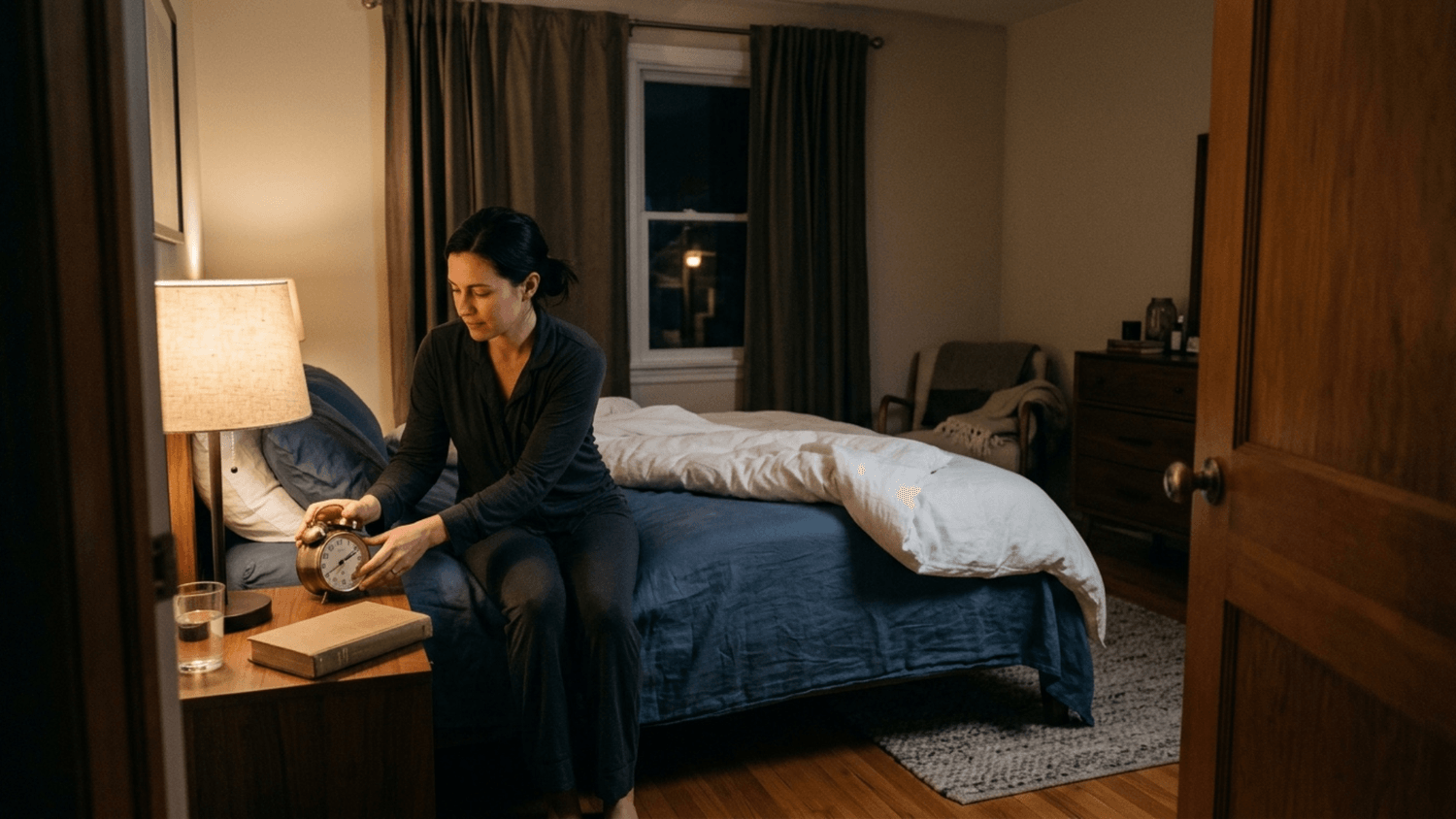
What Commonly Interrupts Sleep Quality?
Some sleep disruptions are obvious.
Loud traffic, a barking dog, or an uncomfortable room can repeatedly wake you.
Others are easier to overlook.
A bright screen shortly before bed may keep your mind engaged.
A room that is too warm may make it difficult to settle.
Stress can follow you into bed, especially when nighttime becomes the first quiet moment you have had all day.
Common obstacles include:
Inconsistent sleep and wake times
Bright lighting late in the evening
Phone use in bed
Work or stressful conversations immediately before sleep
A bedroom that is noisy, bright, or uncomfortable
Heavy meals very close to bedtime
Caffeine too late in the day
Alcohol that makes you sleepy initially but leaves the night unsettled
Watching the clock and worrying about how little sleep remains
Trying to force sleep when your mind is still active
You do not need to correct everything at once.
That often creates another source of pressure.
Look for the interruption that happens most frequently.
Improving one repeated problem may do more than building an elaborate routine you cannot maintain.
Start With a Simple Wind-Down Signal
Your body cannot always move directly from full speed to deep rest.
If you answer messages, watch stimulating content, finish work, and then immediately turn off the light, your environment has changed—but your mind may still be operating at daytime speed.
A wind-down routine creates a transition.
It does not need to take an hour.
Even a short, repeatable sequence can signal that the active part of the day is ending.
Try this basic approach:
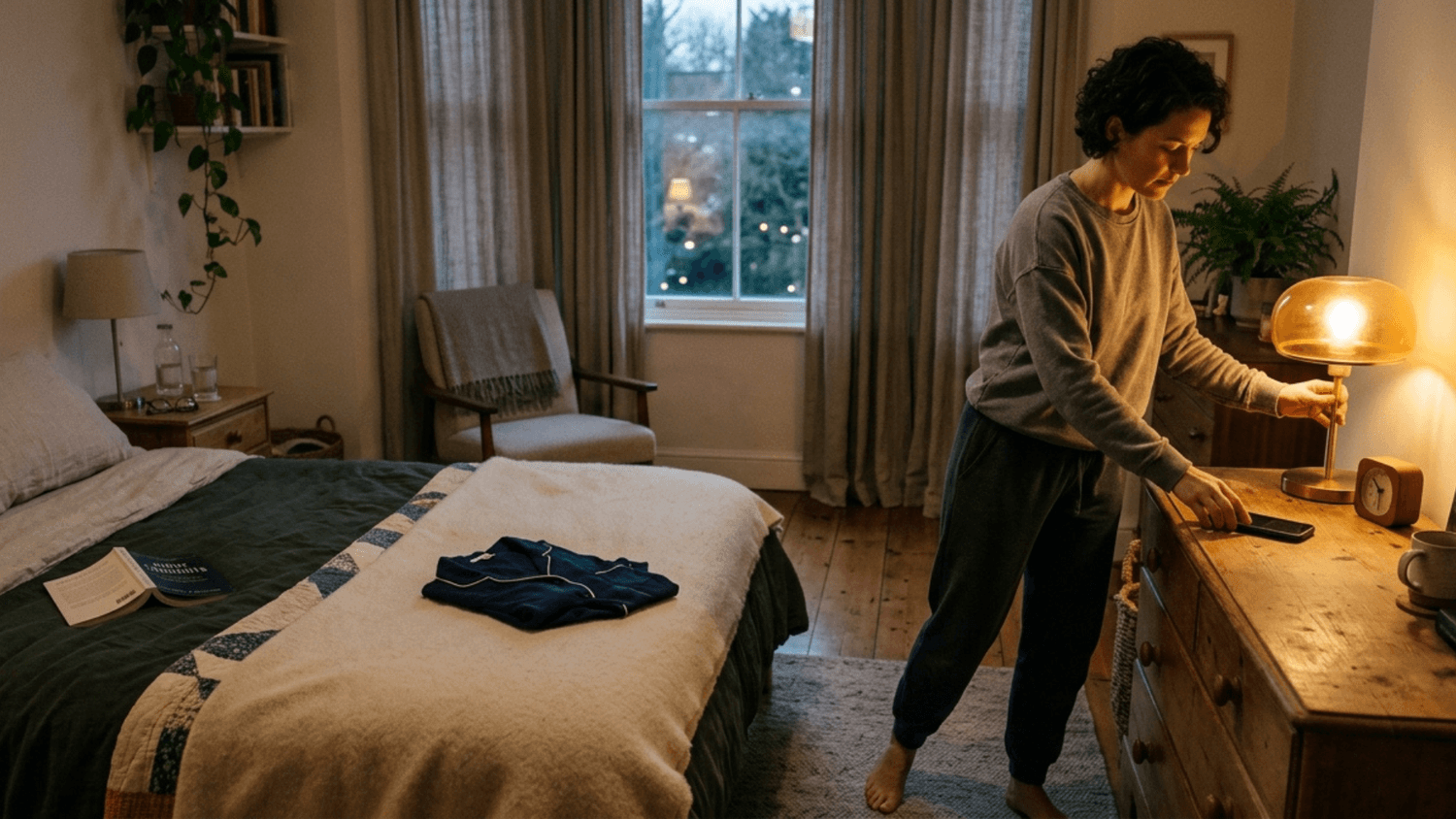
1. Dim the lights. Lower lighting can make the room feel calmer and reduce stimulation.
2. Put screens away. Give yourself a short period without scrolling, messages, or videos.
3. Prepare the room. Adjust the temperature, straighten the bedding, and reduce unnecessary noise.
4. Choose one quiet activity. Read a few pages, stretch gently, or sit quietly with slow breathing.
5. Follow a consistent order. Repetition helps the routine become familiar.
The routine itself is not magic.
Its value comes from reducing stimulation and creating a dependable boundary between your day and your rest.
💡 Make Healthy Evenings Easier to Repeat
You do not need a complicated nighttime checklist.
A few dependable steps can create a clearer path toward consistent rest.
👉 Get the Simple Health Foundations Guide
Keep it simple. Stay consistent. Build from there.
Make Your Bedroom Work for Sleep
Your bedroom does not need to look like a luxury retreat.
It only needs to support the purpose of the room.
Begin with what you can control.
Reduce bright light where possible.
Close curtains, turn off unnecessary electronics, or use a comfortable eye covering if outside light is difficult to block.
Pay attention to temperature.
A room that feels stuffy or overly warm can make settling down harder.
Adjust bedding, airflow, or clothing to create a comfortable environment.
Consider sound.
Some people rest best in silence, while others find consistent background sound less disruptive than unpredictable street noise.
Keep frequently needed items nearby so you are not searching through the room after getting comfortable.
A glass of water, tissues, or a book can be placed within reach before your routine begins.
Most importantly, make the bed a place associated with rest.
If possible, avoid turning it into your office, dining table, entertainment center, and late-night planning station all at once.

Protect the Rhythm of Your Sleep
Consistency helps your body recognize when it is time to become alert and when it is time to slow down.
This does not require following an exact schedule every night.
Real life includes late events, unexpected responsibilities, and mornings that begin earlier than planned.
The goal is to create a general rhythm.
Try keeping your usual bedtime and wake time within a manageable range.
If your schedule changes dramatically between weekdays and weekends, returning to your normal routine may feel harder.
A steady wake time can be especially useful because it gives the day a consistent starting point.
Morning daylight, movement, and regular meals can further reinforce the difference between daytime activity and nighttime rest.
Think in terms of patterns, not perfection.
One late night does not erase your progress.
Return to your usual rhythm the next day without turning the disruption into a week-long slide.
Stop Measuring Every Night as a Success or Failure
Sleep becomes harder when it feels like a performance.
You cannot command yourself to sleep on demand.
The more you stare at the clock and calculate the hours remaining, the more alert and frustrated you may become.
Instead of trying to control sleep directly, focus on creating favorable conditions:
Give yourself enough time
Reduce stimulation
Make the room comfortable
Follow a calm transition
Keep a reasonably consistent schedule
Let the routine work without demanding immediate perfection
Judge progress across several weeks rather than one evening.
You are looking for a general improvement in how you settle down, how often you experience long disruptions, and how you feel during the day.

Build a Low-Energy Version of Your Routine
Some nights, you will be too tired for a complete routine.
That is exactly why you need a shorter version.
A low-energy routine preserves the basic signal without requiring much effort.
It might include:
Turning down the lights
Putting the phone on its charger
Completing basic hygiene
Adjusting the room
Taking a few slow breaths
Getting into bed
This may take only five or ten minutes.
The shorter routine keeps you from abandoning the entire habit because the ideal version feels too demanding.
Consistency becomes easier when your plan includes difficult days.
You can use the longer version when time and energy allow.
On busy nights, return to the essentials.
Pay Attention to Your Daytime Habits
Better nights often begin during the day.
Morning light helps separate waking hours from nighttime rest.
Regular movement can support your overall daily rhythm. Caffeine timing matters because its effects may remain longer than expected.
Long or late naps may also make bedtime more difficult for some people.
Stress deserves attention as well.
If your mind becomes active the moment the room grows quiet, create a place to unload unfinished thoughts before bed.
Write down tomorrow’s priorities, reminders, or concerns.
The purpose is not to solve everything.
It is to give those thoughts somewhere to go besides your pillow.
A short evening note might include:
What must be handled tomorrow
What can wait
What you are worried about
The first action you will take in the morning
This creates closure without requiring you to resolve the entire next day before sleeping.
Know When a Routine May Not Be Enough
Simple habits can improve your sleep environment and make your evenings more consistent.
However, persistent sleep problems should not always be treated as a routine issue.
Consider speaking with a qualified healthcare professional if you regularly struggle to sleep, repeatedly wake gasping or choking, snore heavily, experience uncomfortable sensations that keep you awake, or remain severely tired despite allowing enough time for rest.
It may also be worth seeking guidance if sleep problems are affecting your safety, mood, concentration, or ability to complete daily responsibilities.
A bedtime routine is a useful foundation.
It is not a replacement for appropriate care when something more serious may be interfering with your rest.
💡 Give Better Rest a Clear Next Step
Choose one practical change tonight, repeat it consistently, and notice how your energy responds over time.
👉 Get the Simple Health Foundations Guide
Keep it simple. Stay consistent. Build from there.

Final Thought
Sleep is not only a number recorded by a clock.
The amount of time you rest matters, but those hours are most useful when your sleep is settled and restorative.
A longer night filled with repeated disruption may leave you more tired than expected, while better sleep quality can help you approach the next day with steadier energy and clearer focus.
Start with one improvement you can control.
Dim the lights earlier.
Put the phone away.
Make the room more comfortable.
Create a short wind-down routine that works even when your energy is low.
Do not chase a perfect night.
Build conditions that support better rest, return to them consistently, and evaluate the pattern over time.
Better sleep quality begins with a simple message to your body: the day is finished, the room is calm, and it is safe to slow down.

Categories


Trending
Curious about Java Burn? Discover how this fat-burning coffee additive works, what ingredients it uses, and if it’s right for your daily routine.
Looking for real ways to make extra money in 2024? Here are 15 legitimate side hustles and online income ideas that actually work — no scams, no fluff.
Discover how to build real confidence using small, science-backed micro-habits. No fluff — just proven strategies that actually work.

About me

Hi there 👋 My name is Lisa Grove, I'm the maker of This Blog. One of my favorite things is travel, fun and sun :)
💡 Keep Exploring: Handpicked Reads for You

Discover proven strategies to attract leads using Facebook & Instagram — no ad budget needed.

Learn how to write subject lines and content that get clicks, opens, and responses.

Start your journey toward financial freedom with this simple, proven framework.
📬 Want Smart Marketing Tips in Your Inbox?
Join our free newsletter for weekly tips that help you grow faster and smarter.
© 2025 reebesthelp.com. All rights reserved.