


Why Health Improves Faster When You Remove Pressure: A Sustainable Approach to Better Habits
Health advice often makes improvement sound like a test of discipline.
Follow the strict diet.
Complete the intense workout.
Wake up earlier.
Track every calorie.
Never miss a day.
Push harder whenever progress slows.
That approach may create a burst of motivation, but it can also make healthy living feel like a constant fight.
Every meal becomes a decision to get right.
Every workout becomes another obligation.
Missing one day can feel like failure.
The problem is not always a lack of commitment. Sometimes, the system demands more energy than a person can consistently give.
Health often improves faster when you remove unnecessary pressure because sustainable habits depend on repetition—not punishment.
When your routine feels manageable, you are more likely to continue it through busy days, stressful weeks, and changes in motivation.
Removing pressure does not mean ignoring your health or avoiding effort.
It means building a routine that supports you well enough to continue.
Pressure Can Create Resistance
Pressure can produce short-term action.
A deadline may push you to finish a task, and an upcoming event may motivate you to exercise or change your eating habits.
But pressure is difficult to use as a permanent health strategy.
When every healthy action feels connected to guilt, fear, or unrealistic expectations, resistance begins to grow.
You may still follow the routine for a while, but internally, you are waiting for a chance to escape it.
That resistance can sound like:
“I have to force myself to work out.”
“I ruined everything by eating that meal.”
“If I cannot do the complete routine, there is no point.”
“I need to make up for yesterday.”
“I will start again when I can do it perfectly.”
These thoughts turn ordinary health decisions into emotional battles.
A more supportive approach changes the question.
Instead of asking, “How hard can I push myself?” ask, “What can I realistically repeat?”
That question leads to habits that fit your actual life.
💡 Make Healthy Progress Feel More Manageable
You do not need a perfect routine to begin improving your health. Start with one supportive habit you can repeat without turning your day upside down.
👉 Get the Simple Health Foundations Guide
Keep it simple. Stay consistent. Build from there.
Support Makes Consistency Easier
A supportive health routine reduces the number of obstacles between you and the action you want to take.
For example, telling yourself to exercise for an hour every morning may sound productive.
But if you have limited time, poor sleep, or a demanding schedule, that goal creates daily friction.
A supportive version might be a 15-minute walk after lunch, a short strength routine three times a week, or stretching while dinner cooks.
The smaller action may not look as impressive, but it has an important advantage: you can keep doing it.
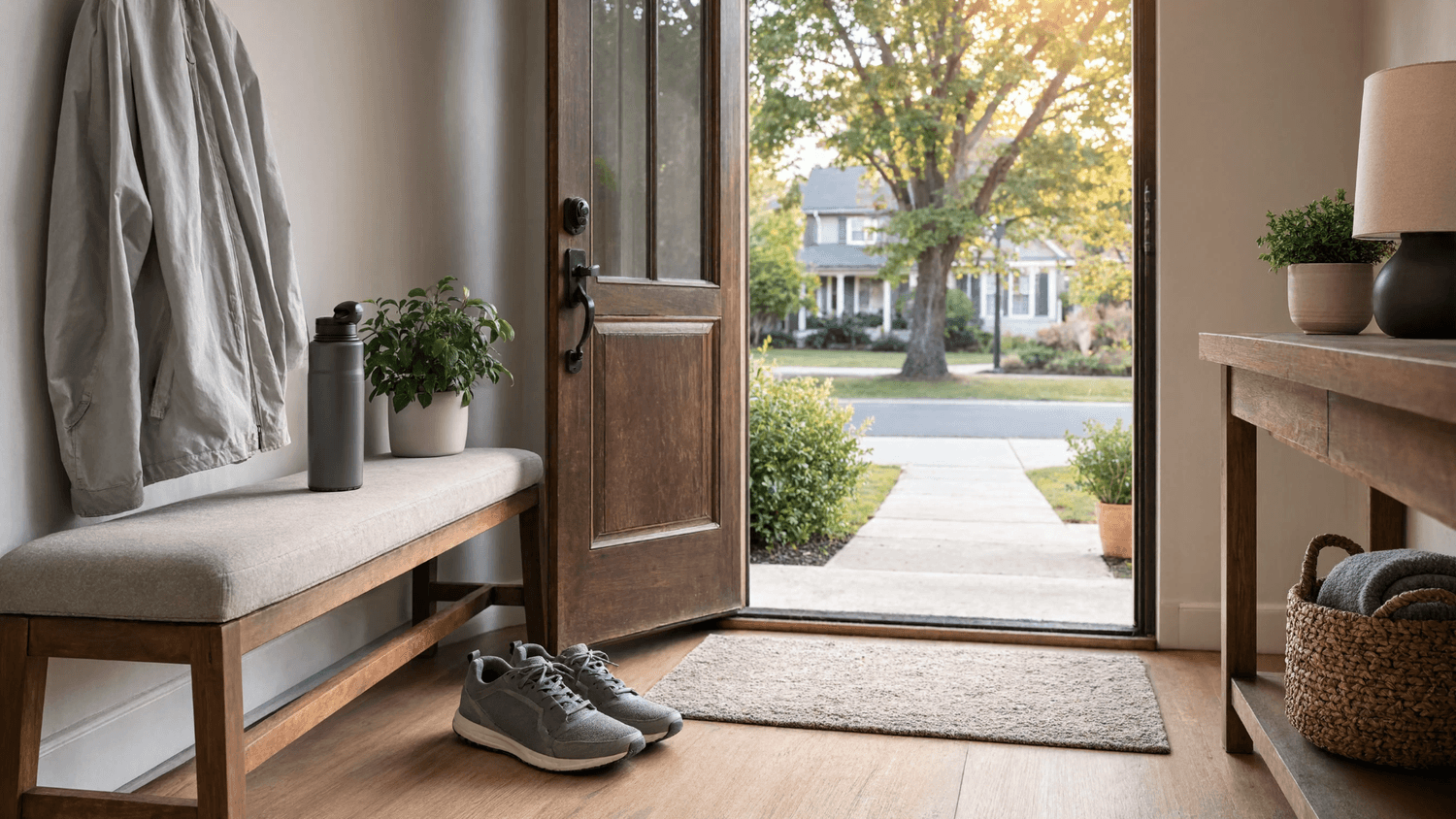
Support can also come from your environment.
Keeping water within reach makes drinking it easier.
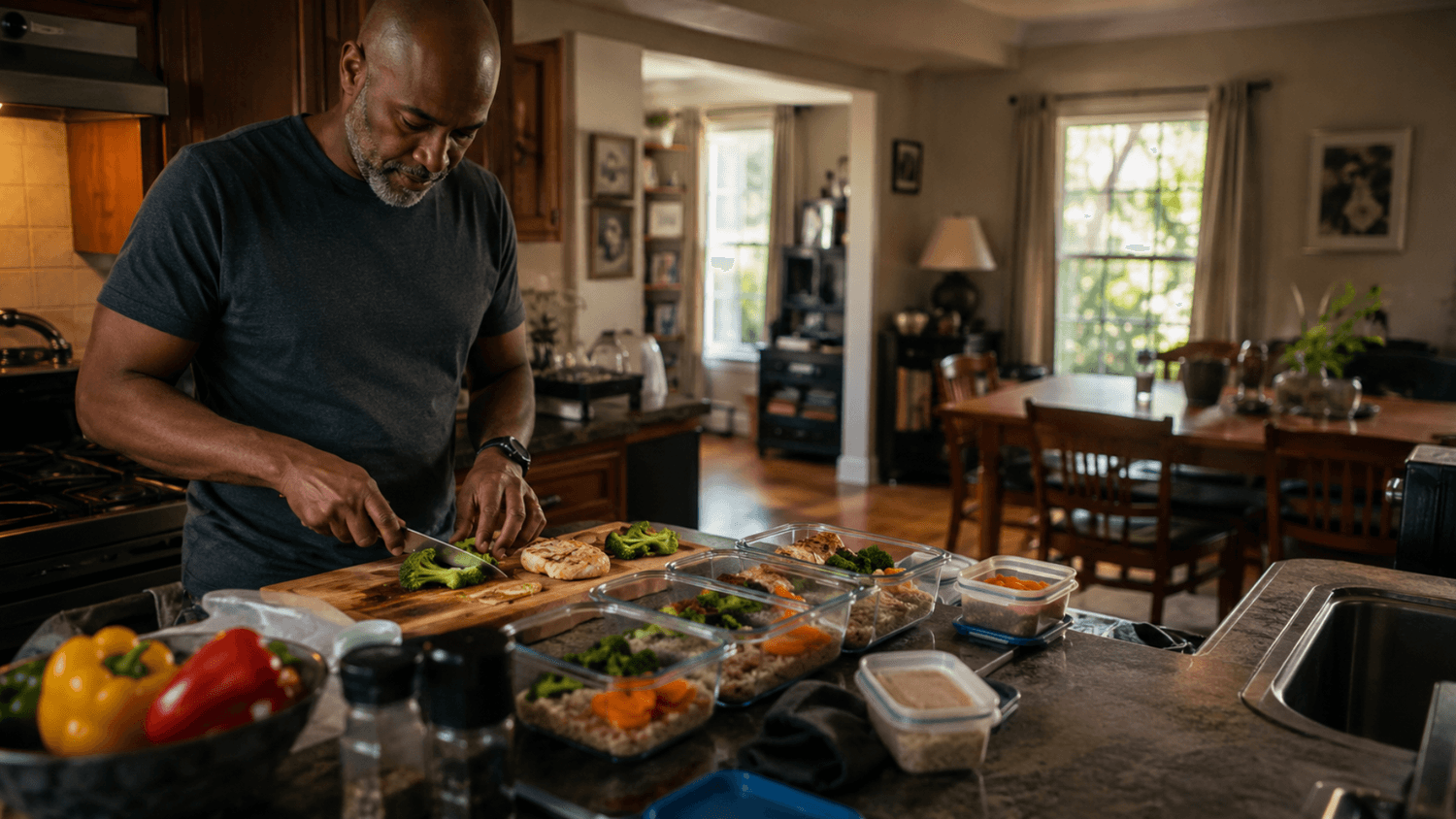
Preparing a simple lunch in advance reduces rushed food decisions.
Placing walking shoes near the door makes movement more convenient.
You are not removing responsibility.
You are designing your surroundings so that responsibility requires less struggle.
Consistency becomes easier when the desired action is visible, convenient, and realistic.
The Difference Between Challenge and Punishment
Some discomfort is part of growth.
Your muscles may feel challenged during exercise.
Changing your usual meals can require planning.
Going to bed earlier may mean turning off a show you want to finish.
Challenge asks you to stretch.
Punishment makes you believe that suffering proves your commitment.
A challenging workout can be adjusted to your current ability.
A punishing workout ignores pain, exhaustion, and recovery needs.
A structured eating plan can help you prepare balanced meals.
A punishing plan makes you feel guilty for being hungry or enjoying food.
The difference is not always the activity itself.
It is the way the activity is used.
A supportive challenge says:
Begin at your current level.
Increase gradually.
Pay attention to pain and fatigue.
Rest when recovery is needed.
Return after interruptions.
Adjust when life changes.
A pressure-driven routine says that anything less than the maximum is not enough.
That mindset makes ordinary adjustments feel like weakness, even when those adjustments are what allow you to continue.
Sustainable health requires enough challenge to create progress and enough support to make that progress repeatable.
Why Extreme Plans Are Difficult to Maintain
Extreme plans often remove too much at once.
You may eliminate several foods, begin exercising every day, change your sleep schedule, start tracking everything, and expect immediate results.
Each change requires attention. Together, they can consume a large amount of mental and physical energy.
The plan works only while you can maintain that level of focus.
Then a stressful week arrives. Work becomes demanding.
Family responsibilities increase.
You sleep poorly or have an unexpected expense.
The health routine begins to collapse because it was designed for ideal conditions.
This is why a plan can be effective on paper but ineffective in real life.
A strong health routine must survive imperfect conditions.
It should have a full version for days when you have time and energy, along with a smaller version for days when you do not.
For example:
Full version: a 30-minute walk.
Smaller version: a 10-minute walk.
Minimum version: walk around the block.
All three versions maintain the habit.
The amount changes, but the direction stays the same.
💡 Build a Routine You Can Actually Repeat
Simple health foundations can help you stop relying on extreme plans and start creating habits that work during both easy and difficult weeks.
👉 Get the Simple Health Foundations Guide
Keep it simple. Stay consistent. Build from there.
Choose Habits That Fit Your Current Life
A health habit is more sustainable when it fits your schedule, energy, environment, and responsibilities.
That means your routine does not need to look like someone else’s routine.
A person working from home may take short movement breaks throughout the day.
Someone working outside the home may walk during lunch or exercise after work.
A caregiver may need brief routines that can be completed without leaving the house.
The best option is not automatically the most intense one.
It is the one you can perform consistently and safely.
Start by examining your current day.
Ask yourself:
When do I usually have the most energy?
What healthy action already feels reasonably easy?
What repeatedly gets in my way?
Which habit would make another healthy choice easier?
What is the smallest version I could complete on a difficult day?
If mornings are rushed, do not build your entire plan around an elaborate morning routine.
If evenings are unpredictable, prepare a backup option.
If cooking daily feels overwhelming, make enough food for more than one meal.
Your routine should cooperate with your life instead of constantly competing against it.
Lower the Starting Point
Many people create health goals with a starting point that is too demanding.
They plan to exercise five days a week after months of inactivity.
They try to prepare every meal at home after relying on convenience food.
They attempt an immediate sleep schedule change of several hours.
A smaller starting point gives your mind and body time to adapt.
You might begin by:
Adding one serving of vegetables to one meal.
Drinking water with breakfast.
Walking for 10 minutes three days a week.
Going to bed 15 minutes earlier.
Preparing one lunch in advance.
Stretching for five minutes after work.
Taking a short screen break during the afternoon.
These actions may appear modest, but they establish evidence that you can follow through.
Once an action becomes familiar, you can expand it.
A 10-minute walk can become 15 minutes. One prepared lunch can become three.
A slightly earlier bedtime can gradually move again.
Progress becomes less intimidating when the next step grows naturally from something you already do.

Stop Using One Difficult Day as Evidence
One missed workout does not erase previous movement.
One unplanned meal does not eliminate your nutritional progress.
One late night does not mean your sleep routine has failed.
Pressure encourages all-or-nothing thinking.
It turns one interruption into a reason to abandon the entire plan.
Health is influenced by patterns over time.
Your next action matters more than the story you create about the last one.
If you miss a planned habit, avoid responding with punishment.
Do not double an intense workout because you missed yesterday.
Do not severely restrict food because you ate more than expected.
Return to your usual supportive routine.
A simple recovery process can help:
1. Notice what happened without exaggerating it.
2. Identify whether the plan was unrealistic or the day was unusual.
3. Adjust the habit if the same obstacle keeps appearing.
4. Complete the next reasonable action.
5. Continue without trying to repay an imaginary debt.
This keeps a disruption from becoming a long break.
Use Minimum Habits on Low-Energy Days
Your minimum habit is the smallest version of an activity that helps you stay connected to your routine.
It is not intended to produce maximum results.
Its purpose is to preserve continuity when your available energy is low.
Your minimum habit might be:
Filling your water bottle once.
Walking for five minutes.
Preparing one balanced snack.
Completing one set of an exercise.
Turning off one screen 15 minutes before bed.
Taking five slow breaths before returning to work.
Minimum habits are especially valuable during stressful periods.
They prevent the routine from becoming another source of pressure while keeping the door open for a stronger return.
You will sometimes do more after starting.
Other times, the minimum will be enough.
Both outcomes are useful because you respected your capacity without completely disconnecting from the habit.

Measure Progress Without Letting Numbers Control You
Tracking can provide useful information.
It can show how often you walk, how consistently you sleep, or whether a new meal routine helps you feel more prepared.
But tracking becomes harmful when every number feels like a judgment.
A scale change, missed step goal, or shorter workout does not provide a complete picture of your health.
Numbers can fluctuate for many reasons, and not every improvement appears immediately in a measurement.
Consider tracking behaviors and experiences alongside outcomes.
You might notice:
How many days you moved intentionally.
Whether you prepared food before becoming overly hungry.
How your energy changed during the afternoon.
Whether you woke feeling rested.
How quickly you returned after missing a habit.
Whether the routine feels easier than it did last month.
These observations reveal forms of progress that pressure often hides.
The goal of tracking is to learn, not to punish yourself.
If the information helps you make a useful adjustment, keep it.
If it creates constant anxiety or obsession, simplify the process or take a break from it.
💡 Create Health Habits Without the Constant Pressure
A sustainable routine should support your life, not make you feel as if you are always falling behind. Focus on practical foundations and build at a pace you can maintain.
👉 Get the Simple Health Foundations Guide
Keep it simple. Stay consistent. Build from there.
Build a Supportive Environment
Willpower is easier to use when your environment supports the decision you want to make.
Small environmental changes can reduce repeated friction:
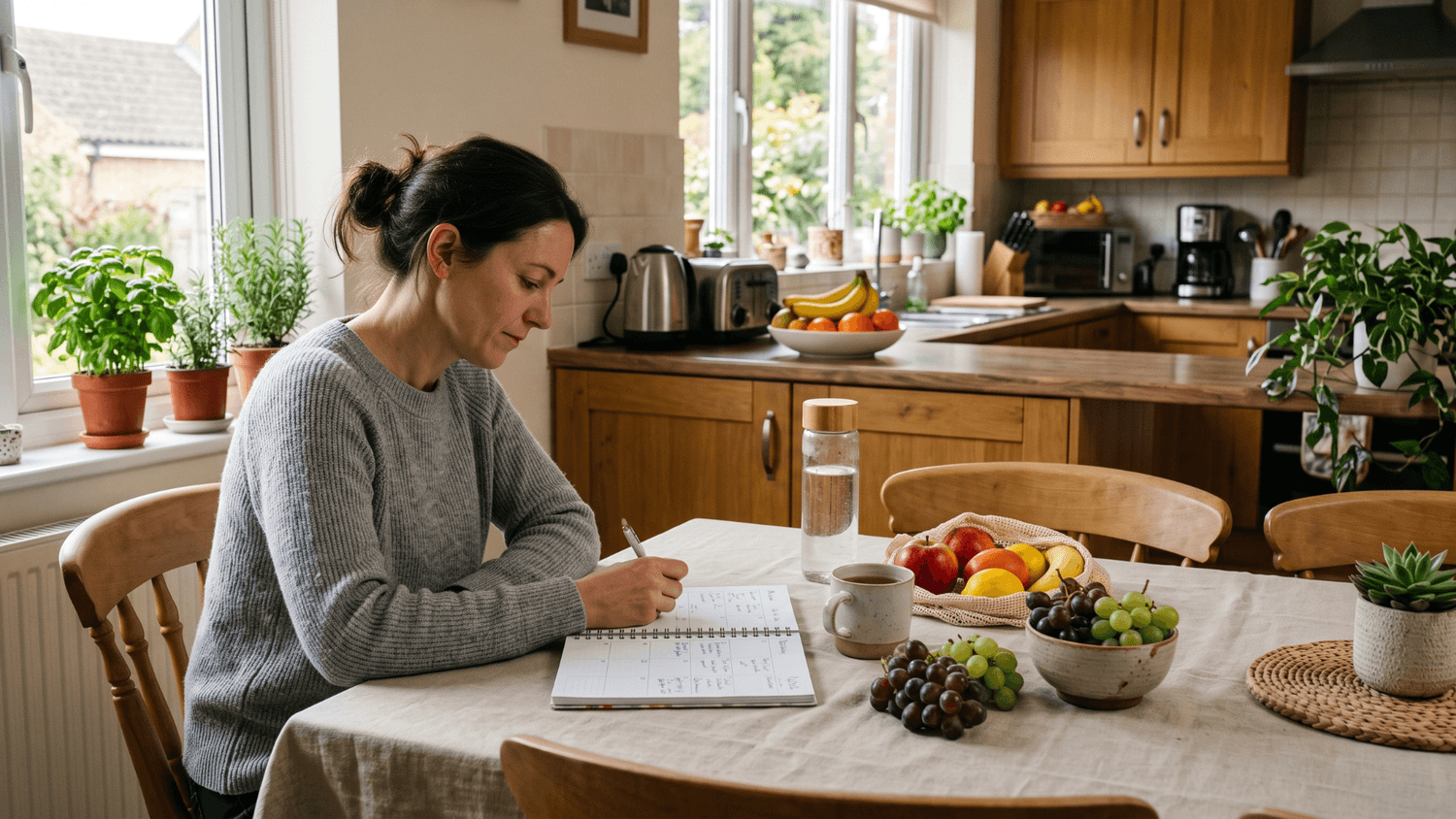
Keep water where you regularly work or relax.
Place fruit or practical snacks where they are easy to see.
Store exercise equipment where it can be reached quickly.
Prepare ingredients before the busiest part of the week.
Set a bedtime reminder that allows time to wind down.
Keep an easy backup meal available.
Schedule movement at a time that usually remains open.
These changes do not guarantee that every choice will be perfect.
They simply make the supportive choice more accessible.
You can also seek support from other people.
Invite someone to walk with you.
Tell your household what routine you are trying to protect.
Ask a qualified professional for guidance when a health concern requires individualized care.
Support is not a shortcut.
It is part of a realistic system.
Know When to Adjust the Plan
Consistency does not mean repeating the same routine forever.
Your needs can change because of your health, schedule, age, responsibilities, mobility, stress, or access to resources.
A routine that worked six months ago may need to be adjusted today.
Review your habits when:
You regularly feel exhausted by the plan.
Pain repeatedly appears during an activity.
Your schedule has materially changed.
You dread every part of the routine.
The habit requires more preparation than you can sustain.
You keep missing it for the same predictable reason.
Your health needs have changed.
Adjustment is not the same as quitting.
It is how you keep the routine relevant.
If you experience ongoing pain, unusual symptoms, major fatigue, or concerns about changing your diet or exercise, consult an appropriate healthcare professional.
Low-pressure health still includes taking symptoms seriously and getting qualified support when needed.
Let Consistency Create the Results
Health progress can feel slow because many benefits develop quietly.
A single walk may improve your mood, but repeated walks build endurance.
One balanced meal can help you feel satisfied, but repeated meal choices create a broader nutritional pattern.
One earlier night may provide more rest, but a consistent sleep routine makes rest more dependable.
The ordinary repetition is what creates the foundation.
You do not need every day to be exceptional.
You need enough supportive days to create a stable pattern—and a simple way to return after the difficult ones.
That is why removing pressure can improve progress.
You spend less energy fighting the routine and more energy practicing it.
💡 Take the Next Simple Step for Your Health
You do not have to rebuild your entire life at once. Choose one health foundation, make it easier to repeat, and allow consistency to do its work.
👉 Get the Simple Health Foundations Guide
Keep it simple. Stay consistent. Build from there.

Final Thought
Better health does not have to come from constant pressure.
You can care about your well-being without turning every decision into a test.
You can challenge yourself without punishing yourself.
You can make progress without demanding perfection.
Choose habits that fit your current life.
Lower the starting point when necessary.
Create a minimum version for difficult days.
Adjust the plan when your needs change.
Most importantly, return without guilt whenever your routine is interrupted.
Health grows through the actions you can continue—not the extreme plan you can tolerate for only a short time.
Make the next step simple enough to repeat.
Then keep building from there.

Categories


Trending
Curious about Java Burn? Discover how this fat-burning coffee additive works, what ingredients it uses, and if it’s right for your daily routine.
Looking for real ways to make extra money in 2024? Here are 15 legitimate side hustles and online income ideas that actually work — no scams, no fluff.
Discover how to build real confidence using small, science-backed micro-habits. No fluff — just proven strategies that actually work.

About me

Hi there 👋 My name is Lisa Grove, I'm the maker of This Blog. One of my favorite things is travel, fun and sun :)
💡 Keep Exploring: Handpicked Reads for You
Discover proven strategies to attract leads using Facebook & Instagram — no ad budget needed.
Learn how to write subject lines and content that get clicks, opens, and responses.

Start your journey toward financial freedom with this simple, proven framework.
📬 Want Smart Marketing Tips in Your Inbox?
Join our free newsletter for weekly tips that help you grow faster and smarter.
© 2025 reebesthelp.com. All rights reserved.