


The Role of Consistency in Hormonal Balance: Build Daily Rhythms Your Body Can Trust
Your body is always responding to what happens around you.
It notices when you sleep, when you wake up, when you eat, how often you move, and how much stress you carry.
It also notices when those patterns change constantly.
One late night or skipped meal will not automatically disrupt your health.
Life is flexible, and your body is designed to adapt.
The problem begins when unpredictability becomes the regular pattern and your system rarely knows what to expect.
Hormones are chemical messengers involved in many important processes, including sleep, appetite, metabolism, stress response, mood, and reproductive health.
These systems are complex, and no single routine can guarantee “perfect” hormonal balance.
However, steady daily habits can give your body a more dependable environment in which to function.
That is the real role of consistency in hormonal balance.
It is not about controlling every biological process.
It is about reducing unnecessary disruption and creating rhythms that support your overall health.
Your Body Responds to Patterns, Not Perfection
Many people approach health as a series of intense corrections.
They sleep poorly for several nights and then try to recover with one long night.
They skip meals during a busy day and eat a very large meal late at night.
They avoid exercise for a week and attempt to compensate with one exhausting workout.
These reactions are understandable, but the body generally benefits more from reasonable habits repeated regularly than from occasional extremes.
Your internal systems work with daily rhythms.
Light and darkness influence your sleep-wake cycle.
Meal timing provides signals related to energy availability.
Physical activity affects how your body uses energy and responds to stress.
When these signals are somewhat predictable, your body has fewer sudden adjustments to make.
Consistency does not mean that every day must look identical.
It means creating a dependable foundation beneath the normal changes of life.
A consistent week can still include:
A later dinner with friends
A missed workout because of work
A weekend morning spent sleeping a little longer
A celebration meal
A stressful or unusually busy day
The goal is not to eliminate those moments.
The goal is to have stable habits you can return to when the moment passes.
💡 Give Your Body a Simpler Foundation
You do not need a perfect routine to support your health. Begin with one dependable habit your body can recognize each day.
👉 Get the Simple Health Foundations Guide
Keep it simple. Stay consistent. Build from there.
How Inconsistent Routines Can Affect Daily Well-Being
A constantly changing routine can make it harder to understand what your body needs.
Imagine waking at 6:00 a.m. one day, 10:00 a.m. the next, and 7:30 a.m. after that.
Meals happen whenever time allows.
Exercise changes from complete inactivity to a very intense session.
Bedtime depends on when the phone finally gets put down.
Your body keeps adjusting, but you may begin to notice that you do not feel steady.
Possible signs can include:
Unpredictable energy
Difficulty settling down at night
Strong hunger after long gaps without food
Irritability when tired or underfed
Trouble concentrating
Feeling overstimulated late in the day
Depending heavily on caffeine to function
These symptoms do not automatically mean that you have a hormonal disorder.
They can have many causes, including stress, illness, medication, nutritional issues, sleep conditions, or other health concerns.
Still, examining your daily patterns is a practical starting point.
A stable routine creates useful information.
When your basic habits are relatively consistent, it becomes easier to notice what improves your well-being and what repeatedly makes you feel worse.
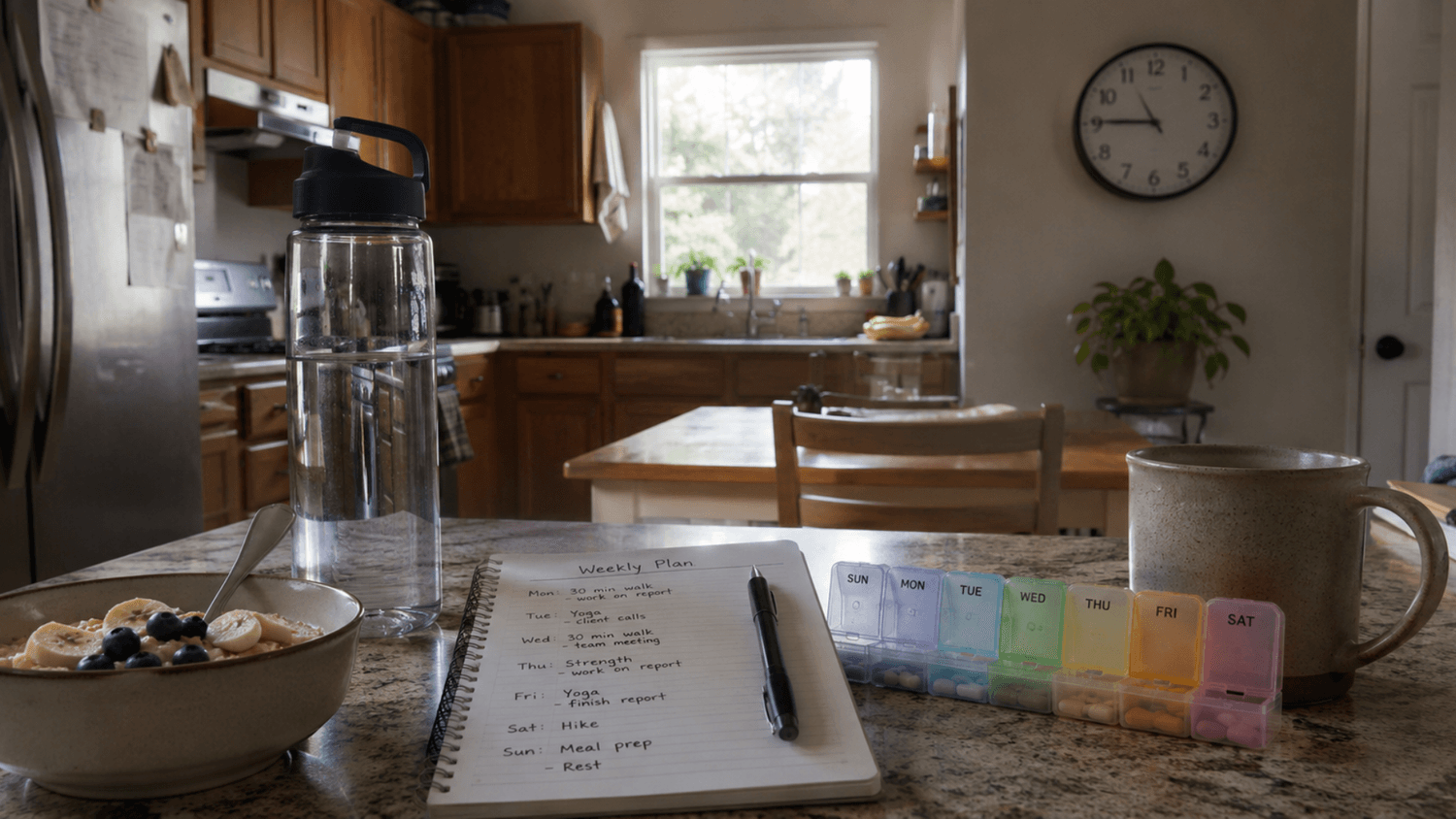
Consistent Sleep Creates an Important Daily Anchor
Sleep is one of the strongest anchors in a healthy routine.
Your sleep-wake cycle is influenced by light exposure, activity, timing, and repeated behavior.
When bedtime and wake time change dramatically from one day to another, falling asleep and waking refreshed may become more difficult.
You do not need to go to bed at the exact same minute every night.
A realistic target is to keep your schedule within a reasonably consistent range whenever possible.
Start with your wake time because it can help organize the rest of the day.
Try these practical steps:
Wake within a similar one-hour window most days.
Get natural morning light soon after waking.
Reduce bright screens and stimulation before bed.
Create a short wind-down routine you can repeat.
Avoid using the weekend to completely reverse your schedule.
Give yourself enough time in bed to meet your sleep needs.
Your wind-down routine does not have to be elaborate.
It might include dimming the lights, putting away your phone, washing your face, preparing clothes for the morning, and reading quietly for ten minutes.
The repetition matters more than making the routine impressive.
Over time, these familiar actions become signals that the active part of the day is ending.

💡 Build a Sleep Rhythm You Can Repeat
A simple bedtime pattern can be more useful than an occasional attempt to create the perfect night of sleep.
👉 Get the Simple Health Foundations Guide
Keep it simple. Stay consistent. Build from there.
Regular Meals Can Support Steadier Energy
People often focus entirely on what they eat while overlooking when and how regularly they eat.
There is no universal meal schedule that works for every person.
Work hours, medical needs, culture, appetite, medication, and personal preference all matter.
The practical goal is to avoid a chaotic pattern that leaves you repeatedly exhausted, overly hungry, or relying on emergency food choices.
For many people, regular meals create more predictable energy throughout the day.
A balanced meal may include:
A source of protein
Fiber-rich carbohydrates
Fruits or vegetables
Healthy fats
Enough food to feel reasonably satisfied
Planning does not require cooking every meal in advance.
It can be as simple as keeping a few dependable options available.
For example, breakfast might be eggs and whole-grain toast, yogurt with fruit and nuts, or oatmeal with added protein.
Lunch could be leftovers, a sandwich with vegetables, or a grain bowl assembled from prepared ingredients.
The point is not to follow a rigid menu.
It is to reduce the number of days when you suddenly realize at 4:00 p.m. that you have barely eaten.
Regular nourishment gives your body a more dependable supply of energy.
It may also make it easier to distinguish physical hunger from stress, exhaustion, boredom, or habit.

Steady Movement Is Better Than Repeated Extremes
Movement supports many areas of health, but inconsistency can turn exercise into a cycle of guilt and overcorrection.
A person may do very little for several days, become frustrated, and then complete a workout so intense that soreness prevents movement for the rest of the week.
That cycle is difficult to maintain.
A steadier approach might include walking most days, completing two strength sessions each week, and adding gentle mobility work when possible.
The specific plan should match your ability, health status, schedule, and goals.
Consistency can be built by lowering the barrier to starting.
Try:
A ten-minute walk after lunch
Gentle stretching while watching television
Two short strength sessions on scheduled days
Taking the stairs when practical
Keeping walking shoes near the door
Using a shorter workout when time or energy is limited
A reduced version of your routine still counts.
If you planned to walk for 30 minutes but only have time for ten, those ten minutes preserve the pattern.
This helps prevent the all-or-nothing thinking that causes many routines to disappear.
Stress Patterns Matter Too
Stress is not only created by major emergencies.
It can also come from constant rushing, digital overload, poor boundaries, unfinished tasks, financial pressure, caregiving, conflict, or never allowing the mind to settle.
You cannot remove every source of stress.
You can, however, create repeated moments that help your system shift out of constant alertness.
A stress-supporting routine could include:
Taking five slow breaths before answering a difficult message
Sitting quietly for a few minutes after work
Writing tomorrow’s priorities before bed
Stepping outside during a break
Turning off unnecessary notifications
Limiting stimulating content late at night
Asking for help before responsibilities become overwhelming
These small practices do not erase the problem creating the stress.
They give you a more deliberate way to respond to it.

💡 Choose Movement and Rest You Can Maintain
Health routines should support your life, not become another source of pressure. Choose a level you can repeat during ordinary weeks.
👉 Get the Simple Health Foundations Guide
Keep it simple. Stay consistent. Build from there.
Build Your Routine Around Three Reliable Anchors
Trying to organize every hour of the day can quickly become overwhelming.
Instead, establish three anchors that keep the basic structure of your day intact.
1. A morning anchor
Choose a simple action that starts the day consistently.
That might be opening the curtains, drinking water, taking prescribed medication, eating breakfast, or walking for five minutes.
2. A midday anchor
Choose something that prevents the day from becoming completely reactive.
This could be eating lunch away from your desk, taking a brief walk, refilling your water bottle, or checking your energy before reaching for more caffeine.
3. An evening anchor
Choose a repeated signal that prepares your body and mind for rest.
Try lowering the lights, putting devices away, preparing for the next morning, or beginning your bedtime routine at a similar time.
Once these anchors become familiar, you can add other habits around them.
This is usually easier than trying to install an entirely new lifestyle at once.

What to Do When Your Routine Gets Interrupted
Consistency is often misunderstood as never missing a day.
That definition is too fragile for real life.
Travel, illness, deadlines, family responsibilities, appointments, and unexpected problems will disrupt even a well-designed routine.
The important skill is learning how to return without turning the interruption into abandonment.
Use a simple reset process:
Identify what changed
Did you stay up late?
Skip several meals?
Stop moving because work became busy?
Naming the disruption helps you respond practically.
Restart the next available action
Do not wait for Monday, next month, or the perfect mood.
Return at the next reasonable opportunity.
Use the smallest useful version
If your usual routine feels too demanding, reduce it temporarily.
Prepare one balanced meal, take one short walk, or begin winding down 15 minutes earlier.
Avoid punishment
You do not need to starve after overeating, complete an extreme workout after resting, or stay in bed for an entire weekend after several late nights.
Return to your normal foundation.
The ability to restart calmly is part of consistency.
In fact, it may be the most important part.
Track Patterns Without Becoming Obsessed
A simple record can help you see connections between your routine and how you feel.
For two weeks, note:
Approximate bedtime and wake time
General meal timing
Daily movement
Energy level
Mood and focus
Any unusual symptoms
Major stressors
Keep the process brief.
The goal is observation, not constant self-monitoring.
You may notice that your afternoon energy is worse after skipping lunch, that late-night screen use makes falling asleep harder, or that a short walk improves your ability to settle after work.
Those patterns can guide practical adjustments.
If you experience persistent fatigue, major mood changes, significant weight changes, irregular menstrual cycles, severe sleep problems, unusual thirst, hair loss, or other concerning symptoms, speak with a qualified healthcare professional.
Lifestyle consistency can support health, but it should not replace appropriate evaluation or treatment.
💡 Create a Health Routine Your Body Can Trust
Start with dependable basics and give them time to work. Small patterns become meaningful when you can continue them.
👉 Get the Simple Health Foundations Guide
Keep it simple. Stay consistent. Build from there.

Final Thought
Hormonal health is influenced by many factors, and it cannot be reduced to one habit or perfect routine.
Still, your daily patterns create the environment in which your body must operate.
Give it rhythms it can recognize.
Wake and wind down at reasonably similar times.
Eat regularly enough to support your energy.
Move in ways you can maintain. Create small, repeated opportunities to recover from stress.
Do not aim for a life that never changes.
Build a foundation strong enough to return to when it does.
Balance is rarely created through one dramatic decision.
It develops through steady habits, repeated patiently, until your body has something dependable to trust.

Categories


Trending
Curious about Java Burn? Discover how this fat-burning coffee additive works, what ingredients it uses, and if it’s right for your daily routine.
Looking for real ways to make extra money in 2024? Here are 15 legitimate side hustles and online income ideas that actually work — no scams, no fluff.
Discover how to build real confidence using small, science-backed micro-habits. No fluff — just proven strategies that actually work.

About me

Hi there 👋 My name is Lisa Grove, I'm the maker of This Blog. One of my favorite things is travel, fun and sun :)
💡 Keep Exploring: Handpicked Reads for You

Discover proven strategies to attract leads using Facebook & Instagram — no ad budget needed.

Learn how to write subject lines and content that get clicks, opens, and responses.

Start your journey toward financial freedom with this simple, proven framework.
📬 Want Smart Marketing Tips in Your Inbox?
Join our free newsletter for weekly tips that help you grow faster and smarter.
© 2025 reebesthelp.com. All rights reserved.