


Sleep Debt is Real — and Here’s How to Pay It Off: Smarter Recovery Habits for Better Energy and Focus
Sleep Debt Is More Serious Than Most People Think
Most people do not realize they are carrying sleep debt.
It builds quietly.
A late night here.
An early alarm there.
Scrolling longer than planned.
Watching “just one more video.”
Answering messages in bed.
Getting up tired and repeating the cycle again.
The problem is that sleep debt rarely feels dramatic at first.
You still go to work.
You still handle responsibilities.
You still function.
But your body notices the difference long before your mind fully accepts it.
Energy drops.
Focus weakens.
Mood changes faster.
Motivation feels harder to access.
Simple tasks feel heavier than they should.
Sleep debt slowly reduces the quality of everything else.
And unlike money debt, you cannot completely erase it overnight with one giant payment.
That is why smarter recovery matters more than “catching up.”
What Sleep Debt Actually Means
Sleep debt is the gap between the sleep your body needs and the sleep you consistently get.
If your body functions best with eight hours but you only sleep six, you create a two-hour deficit.
That deficit compounds over time.
A few nights may not seem serious.
But after several days or weeks, the effects become noticeable:
Slower thinking
Reduced patience
Increased cravings
Poorer recovery
Brain fog
More emotional reactivity
Lower physical performance
Reduced productivity
The difficult part is that many people normalize these symptoms.
They assume:
“I’m just busy.”
“This is adulthood.”
“I’ll sleep later.”
“Everyone is tired.”
But chronic exhaustion should not become your baseline.
Your body is not designed to operate at full capacity while constantly under-recovered.
💡 Build Better Energy Without Extreme Routines
Small daily habits often improve energy more than massive lifestyle overhauls.
👉 Get the Simple Health Foundations Guide
Keep it simple. Stay consistent. Build from there.
Why Weekend Oversleep Usually Does Not Fully Work
A common strategy is “weekend recovery sleep.”
People stay exhausted all week and then sleep extremely long hours on Saturday or Sunday.
While extra sleep can help somewhat, it usually does not fully repair the problem.
In some cases, it can even disrupt your sleep rhythm further.
Here is why.
Your body relies heavily on consistency.
When your sleep schedule changes dramatically:
Bedtime shifts
Wake-up times shift
Circadian rhythm becomes unstable
Monday feels worse again
This creates the familiar cycle:
Exhausted during weekdays
Oversleep on weekends
Struggle Sunday night
Start Monday already tired
Instead of dramatic recovery attempts, gradual recovery usually works better.
That means:
Slightly earlier bedtimes
Consistent wake times
Reduced nighttime stimulation
Better evening routines
Small recovery habits repeated consistently
Recovery works best when your nervous system feels stable.

The Hidden Ways Sleep Debt Affects Daily Life
Sleep debt does not only affect sleep.
It affects decision-making.
This matters more than most people realize.
When people are under-rested:
Impulse control weakens
Emotional regulation becomes harder
Motivation drops
Stress tolerance shrinks
Cravings increase
This is why exhausted people often:
Eat worse
Move less
Feel mentally overwhelmed
Delay important tasks
Lose consistency
Sleep directly affects self-control.
That means poor sleep can quietly sabotage:
Health goals
Work performance
Fitness progress
Emotional stability
Relationships
Long-term habits
The issue is not laziness.
Often, the brain is simply depleted.
A tired brain prioritizes comfort and short-term relief over long-term thinking.
Blue Light and Nighttime Stimulation Matter More Than You Think
One major contributor to sleep debt is nighttime stimulation.
Especially screens.
Phones, tablets, laptops, and televisions all keep the brain mentally active longer than many people realize.
Even if you feel relaxed while scrolling, your brain is still processing:
Notifications
Information
Bright light exposure
Emotional triggers
Constant stimulation
Blue light suppresses melatonin production.
Melatonin helps signal to your body that it is time to sleep.
When melatonin is delayed:
Falling asleep becomes harder
Sleep quality decreases
Recovery weakens
Sleep schedules drift later
This is one reason people feel “wired but tired” late at night.
The body is exhausted.
But the brain is overstimulated.
Small changes help:
Lower screen brightness
Avoid doom-scrolling
Stop stimulating content late at night
Use warm lighting in the evening
Create a calmer wind-down routine
None of these changes need to be perfect.
But consistency matters.
💡 Better Sleep Starts With Smaller Evening Decisions
Most sleep problems begin long before your head hits the pillow.
👉 Get the Simple Health Foundations Guide
Keep it simple. Stay consistent. Build from there.

The Smarter Way to Recover From Sleep Debt
Trying to “fix” everything with one giant sleep session usually does not work well.
Instead, think gradual recovery.
One of the best approaches is adding thirty to sixty extra minutes of sleep opportunity for several nights in a row.
That may look like:
Going to bed earlier
Reducing evening screen time
Starting nighttime routines sooner
Waking up slightly later when possible
This approach supports recovery without shocking your schedule.
Your body responds better to steady consistency than chaos.
The goal is not perfection.
The goal is recovery momentum.
Even small improvements repeated over time create noticeable results.
Strategic Naps Can Help — If Used Correctly
Naps can be useful tools.
But timing and length matter.
Long naps can sometimes leave people feeling:
Groggy
Disoriented
Less rested
More awake late at night
That is why short naps usually work best.
Fifteen to twenty minutes is often ideal.
Short naps may help:
Alertness
Mood
Focus
Mental clarity
Reaction time
The key is avoiding deep sleep cycles.
Strategic naps are recovery support — not replacements for nighttime sleep.
A nap should help stabilize energy, not completely replace proper rest.
Good nap timing also matters.
Earlier afternoon naps tend to work better than evening naps because they interfere less with nighttime sleep.
Why Recovery Requires Consistency More Than Motivation
One mistake people make is treating sleep recovery emotionally.
They wait until they feel disciplined enough.
But sleep health usually improves through systems, not motivation.
Simple systems help:
Same bedtime window
Same wake-up window
Reduced screen use
Dim lights at night
Cooler sleeping environment
Consistent wind-down habits
You do not need perfect discipline every night.
You need fewer chaotic nights overall.
That difference matters.
Your nervous system responds strongly to patterns.
Even imperfect consistency can improve recovery significantly over time.

Sleep Debt and Stress Often Feed Each Other
Stress increases poor sleep.
Poor sleep increases stress.
This creates a cycle many people stay trapped in for years.
When stress levels rise:
The brain stays alert longer
Cortisol remains elevated
Relaxation becomes harder
Sleep quality drops
Then poor sleep makes emotional regulation weaker the next day.
This leads to:
Shorter patience
More overwhelm
Faster frustration
Higher anxiety sensitivity
The cycle repeats.
This is why nighttime routines matter so much.
They signal safety to the nervous system.
Simple calming behaviors help:
Lower lighting
Stretching
Reading
Breathing exercises
Calm music
Reduced notifications
Recovery is not only physical.
It is neurological.
Your nervous system needs signals that the day is ending.
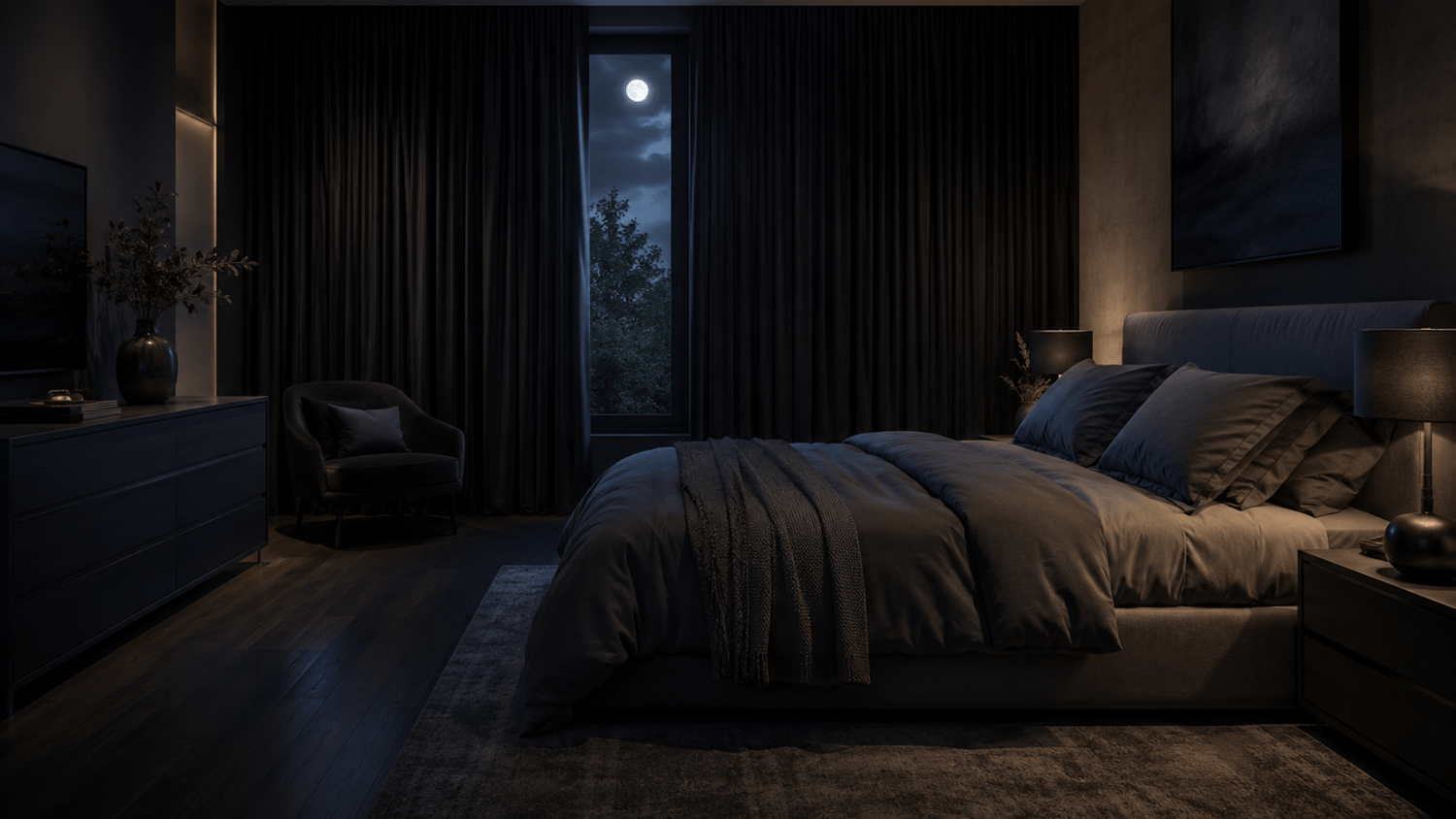
Your Environment Quietly Shapes Your Sleep Quality
Many people focus only on sleep duration.
But sleep quality matters too.
Your environment strongly affects that quality.
Helpful adjustments include:
Cooler room temperatures
Darker spaces
Reduced noise
Comfortable bedding
Less clutter
Reduced light exposure
Even small environmental upgrades can help your body relax faster.
Sometimes the issue is not laziness or lack of discipline.
Sometimes the environment constantly keeps the nervous system alert.
Good sleep environments reduce friction.
They make rest easier instead of harder.
💡 Better Recovery Does Not Require Perfect Discipline
You do not need an extreme routine to improve your sleep and energy.
Small repeatable changes matter more.
👉 Get the Simple Health Foundations Guide
Keep it simple. Stay consistent. Build from there.
Signs Your Body May Still Be Carrying Sleep Debt
Some signs are obvious.
Others are subtle.
Common signs include:
Needing caffeine constantly
Feeling tired despite sleeping in
Brain fog
Low motivation
Irritability
Midday crashes
Difficulty concentrating
Falling asleep quickly on the couch
Feeling “awake” only late at night
Some people also notice:
Increased appetite
More sugar cravings
Worse workout recovery
Reduced patience
Difficulty staying consistent with goals
Sleep debt affects almost every system in the body.
That is why improving sleep often creates ripple effects across multiple areas of life.
Small Sleep Improvements Create Bigger Life Improvements
People often underestimate how much sleep affects everything else.
Better sleep can improve:
Mood
Decision-making
Energy
Focus
Emotional resilience
Recovery
Productivity
Long-term consistency
This is important because consistency drives results in almost every area of life.
Health habits become easier when your brain is rested.
Exercise becomes easier.
Meal choices improve.
Patience improves.
Stress becomes more manageable.
Sleep is not separate from health.
It supports everything else.
You Do Not Need a Perfect Routine to Improve
Many people avoid improving sleep because they believe they need a “perfect routine.”
That mindset creates unnecessary pressure.
You do not need:
A luxury bedroom
Expensive supplements
Complex trackers
Perfect discipline
You need manageable improvements repeated consistently.
That could mean:
Sleeping thirty minutes earlier
Reducing nighttime scrolling
Keeping naps shorter
Dimming lights earlier
Sticking to a more stable sleep schedule
Simple changes become powerful when repeated.
Recovery is usually quieter than people expect.
It often looks like:
Better mornings
Clearer thinking
Less irritability
More stable energy
Better emotional control
These small improvements compound over time.

💡 Consistent Recovery Builds Better Long-Term Health
Your body recovers best when sleep becomes a steady priority instead of an emergency response.
👉 Get the Simple Health Foundations Guide
Keep it simple. Stay consistent. Build from there.

Final Thoughts: Recovery Works Better When It Is Sustainable
You cannot fully erase months or years of poor sleep with one weekend of oversleeping.
But you can recover smarter.
That starts with understanding that sleep debt is real.
Your body notices every shortened night, every overstimulated evening, and every inconsistent schedule.
The good news is that recovery does not require perfection.
It requires consistency.
Small improvements repeated daily often outperform dramatic recovery attempts.
Earlier bedtimes.
Short strategic naps.
Reduced nighttime stimulation.
Better sleep environments.
More stable routines.
These habits support long-term energy instead of temporary survival.
Better sleep is not laziness.
It is maintenance for your brain, body, mood, focus, and long-term health.
And when recovery improves, everything else becomes easier to sustain.

Categories


Trending
Curious about Java Burn? Discover how this fat-burning coffee additive works, what ingredients it uses, and if it’s right for your daily routine.
Looking for real ways to make extra money in 2024? Here are 15 legitimate side hustles and online income ideas that actually work — no scams, no fluff.
Discover how to build real confidence using small, science-backed micro-habits. No fluff — just proven strategies that actually work.

About me

Hi there 👋 My name is Lisa Grove, I'm the maker of This Blog. One of my favorite things is travel, fun and sun :)
💡 Keep Exploring: Handpicked Reads for You

Discover proven strategies to attract leads using Facebook & Instagram — no ad budget needed.
Learn how to write subject lines and content that get clicks, opens, and responses.

Start your journey toward financial freedom with this simple, proven framework.
📬 Want Smart Marketing Tips in Your Inbox?
Join our free newsletter for weekly tips that help you grow faster and smarter.
© 2025 reebesthelp.com. All rights reserved.